Gram Jarhara Ward Indira Nagar
Lucknow
Gram Jarhara Ward Indira Nagar
Lucknow  smartwindow50@gmail.com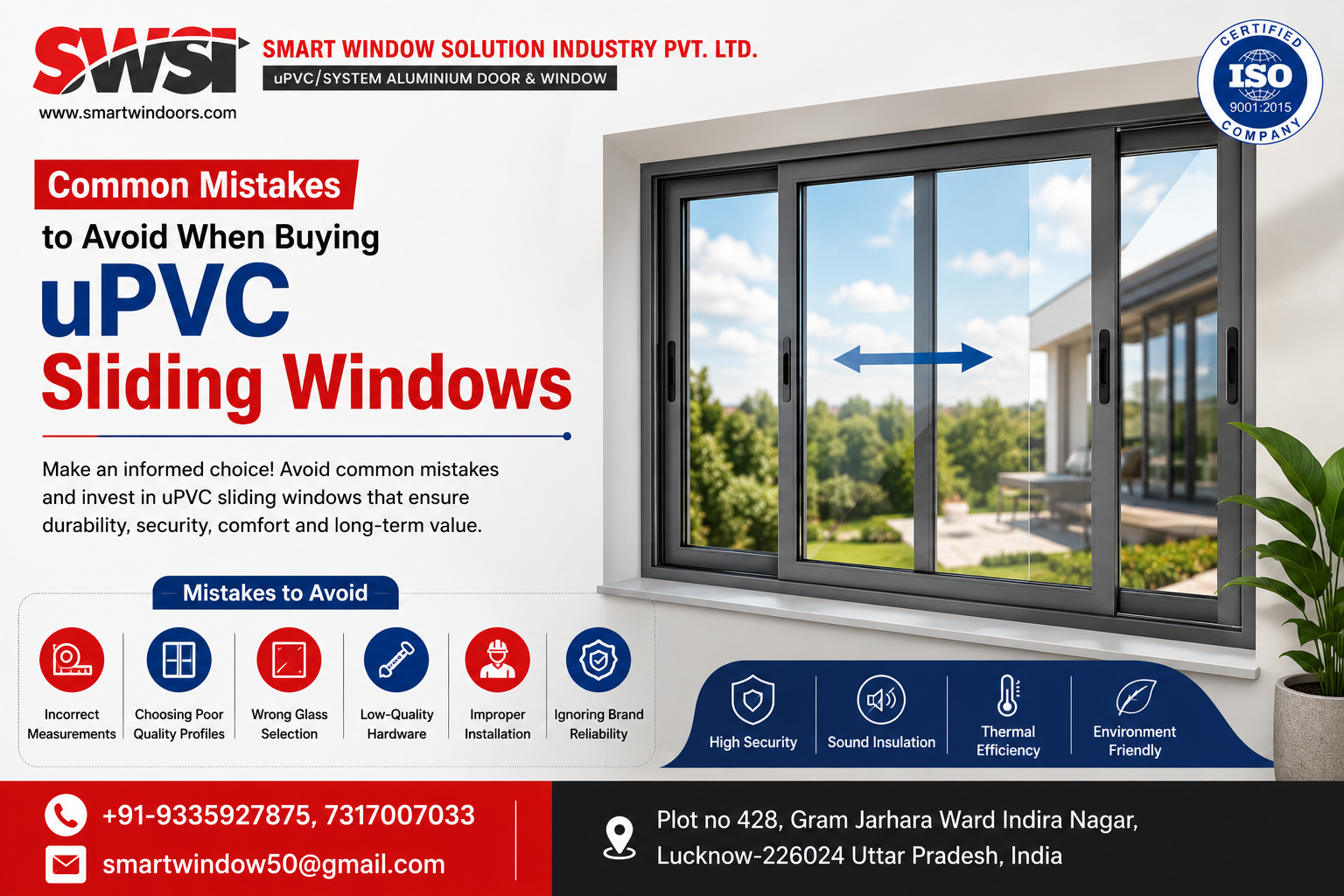
When investing in UPVC sliding window, people expect more than
the attractive design. The quality of the profile, hardware, glass, and
installation all these factors also matter as they influence how well the
window performs over time. Many homeowners focus only on price, only to face
issues like poor insulation, difficult operation, or frequent repairs later. To
help you avoid these problems, we are sharing a few common mistakes in this
blog that one must avoid while buying these windows.
Selecting windows based only on price
A low-priced window may seem like a good deal initially, but cheaper
products often compromise on profile quality, hardware, and weather sealing.
This can lead to higher maintenance costs and a shorter product lifespan. Instead
of comparing prices alone, evaluate the overall value, including durability,
warranty, and installation quality.
Ignoring the quality of the UPVC profile
The profile forms the backbone of every UPVC sliding window. One
must understand that poor-quality profiles may lose their strength, fade, or
deform after years of exposure to sunlight and changing weather.
Look for premium-grade UPVC profiles that are UV-resistant, lead-free,
and manufactured according to recognized quality standards. High-quality
profiles retain their appearance and structural stability for years.
Choosing the window with wrong glass
Many buyers overlook the importance of glass while selecting windows.
However, the glass directly affects energy efficiency, indoor comfort, and
noise reduction. Depending on your location and requirement, consider options
such as:
·
Toughened glass for added safety
·
Double-glazed glass for improved insulation
·
Laminated glass for better sound reduction
·
Low-E glass for enhanced energy efficiency
Overlooking hardware quality
Even the best window profile cannot perform well with inferior
hardware. Rollers, handles, locks, and tracks determine how smoothly a sliding
window operates. Premium hardware ensures effortless sliding, enhanced
security, and longer service life. Industry studies indicate that
hardware-related issues account for a significant share of window maintenance
complaints, making quality components a worthwhile investment.
Not measuring the opening correctly
Incorrect measurements can result in installation gaps, air leakage,
water seepage, and operational problems. Professional site measurement before
manufacturing ensures the window fits perfectly. This also improves insulation,
weather resistance, and overall performance.
Not considering future maintenance
Although UPVC windows
require very little maintenance, regular cleaning of tracks and periodic
hardware inspection help maintain smooth operation. Unlike traditional wooden
windows, these sliding windows made of UPVC material do not require painting,
polishing, or termite treatment, making them a practical long-term investment.
Conclusion
Buying a UPVC Sliding Window is a decision that affects your
home's comfort, energy efficiency, and appearance for many years. Avoiding
common mistakes such as choosing low-quality profiles, ignoring hardware,
selecting unsuitable glass, or compromising on installation helps maximize your
investment. We at Smart Window SolutionsIndustry Pvt. Ltd. provide premium-quality uPVC sliding windows designed
with durability, precision, and modern aesthetics, ensuring reliable
performance in every season.
FAQs – Frequently Asked Questions
Why is profile quality important in uPVC sliding windows?
A premium-quality profile improves durability, weather resistance, insulation,
and the overall lifespan of the window.
Which glass is best for UPVC sliding windows?
The ideal choice depends on your needs. Double glazing, toughened glass,
laminated glass, and Low-E glass all offer different performance benefits.
Do uPVC sliding windows require frequent maintenance?
No, regular cleaning of the tracks and occasional hardware checks are usually
enough to keep them functioning smoothly.
Can poor installation affect window performance?
Yes, incorrect installation can lead to air leakage, water seepage, poor
insulation, and difficulty in operation.